Landing Page Design Cost: What You Actually Pay and Why
Landing page design cost typically runs from around $150–$600 for a polished template setup to roughly $1,500–$5,000 for a custom, research-backed page — and $6,000–$10,000+ when an agency layers in strategy, copywriting, and weeks of A/B testing. The number swings that wide because you're not paying for "a page," you're paying for how much thinking, research, and craft goes into it before a single pixel is placed.
If you've searched for a price and gotten quotes ranging from $200 to $10,000 for what sounds like the same thing, you're not imagining it. The problem is that "landing page" describes both a template with your logo dropped in and a fully researched conversion asset that took someone two weeks to build. Below is how I actually scope and price this work, so you can read any quote you get and know what you're really buying.
What "landing page design cost" actually covers
A landing page is a single, focused page built to do one job: turn a visitor into a lead, signup, or sale. That focus is exactly why the landing page design cost is so hard to pin down — the design is the cheap part. The expensive part is figuring out what to say, to whom, and in what order so the page converts.
Here's the honest tier breakdown I use, based on scope rather than on how fancy the final page looks:
- Template polish ($150–$600): A proven layout with your brand, copy, and images dropped in. Fast, fine for validating an idea. Structure is fixed.
- Custom design ($1,500–$5,000): Layout built for your specific offer and audience, real messaging hierarchy, full mobile work, developer-ready handoff.
- Research-backed custom ($3,000–$10,000+): Audience research, competitor teardown, copy, custom visuals, and A/B testing over weeks. Usually agency territory.
What actually drives the price up
When one designer quotes $500 and another quotes $4,000, the gap is almost never "design skill." It's how many of these five things are included.
1. Copy and messaging
The single biggest lever. A page built around sharp copy that names the visitor's problem converts far better than a beautiful page with vague headlines. If copywriting is included, expect the price to climb — writing a headline that works can take longer than laying out the whole page.
2. Research
Reading reviews, interviewing your customers, studying competitors, mapping objections. This is invisible in the final file but it's what separates a page that guesses from a page that knows why people hesitate. Research is the line item cheap quotes quietly skip.
3. Custom visuals
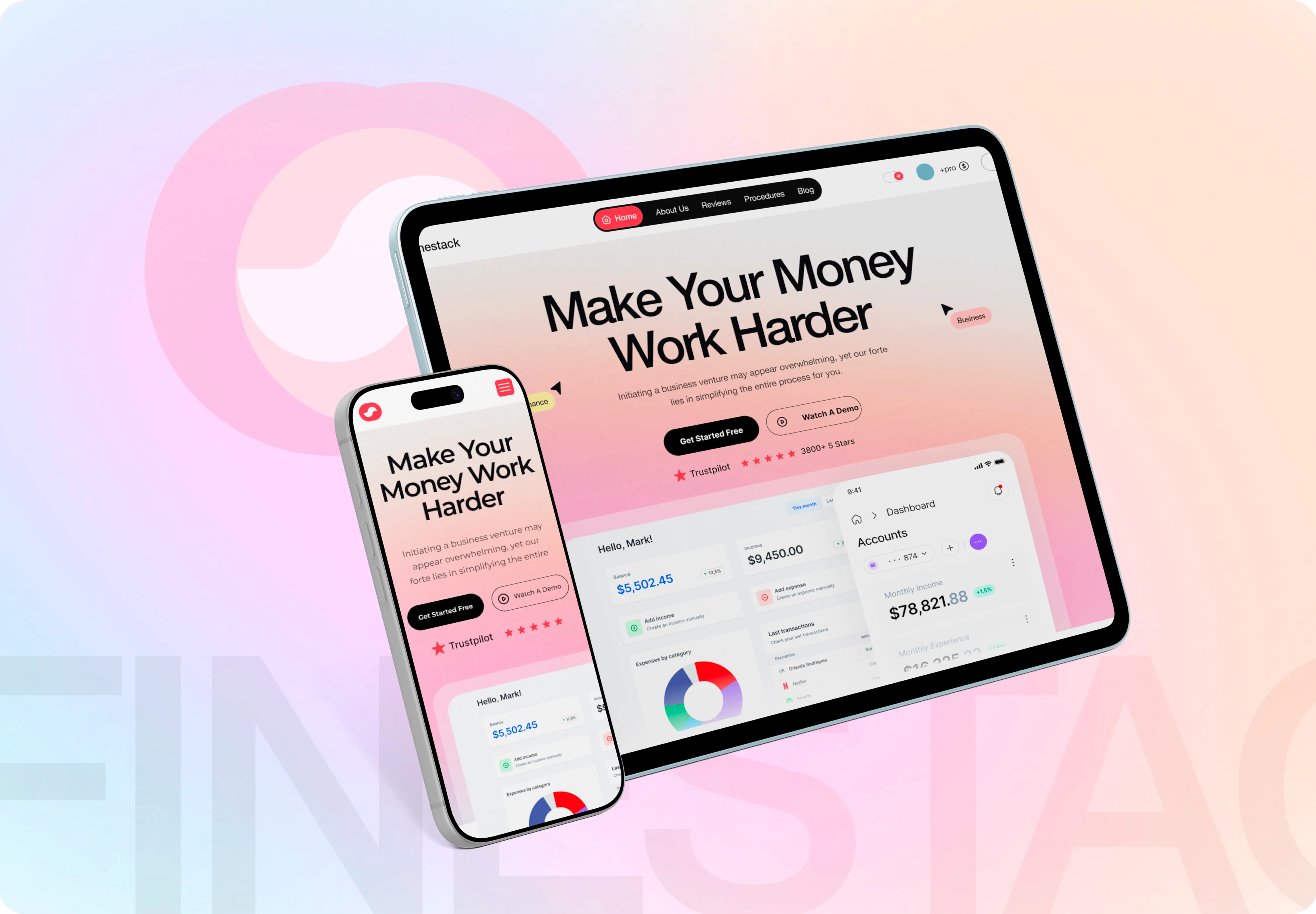
Stock photos are free-ish. Custom illustration, product mockups, UI shots, icon sets, and motion cost real hours. A finance or SaaS page that needs to show a real interface — like the Finestack finance software landing page I designed — carries more visual work than a page that leans on a hero photo.
4. Developer handoff
A design that a developer can build without guessing — clean components, defined spacing, states, responsive rules — takes more effort than a static mockup. It also saves you money later, because a page built for performance and clean handoff converts better and doesn't need rebuilding after launch. I hand off frontend-ready Figma for this reason.
5. Revisions
Two rounds is normal. Unlimited revisions either don't exist or are priced into a much higher number. Watch for quotes that look cheap because they include exactly one round and charge for everything after.
Hourly vs fixed pricing
You'll be quoted one of two ways, and the difference matters more than the rate.
Hourly ranges enormously — roughly $15–$50/hour offshore, $50–$150+ for experienced US freelancers, and higher at agencies. Hourly is honest for open-ended work, but it puts the risk on you: if the estimate is wrong, your bill grows.
Fixed pricing puts the risk on the designer. You agree on scope, you get a number, and that's the number. For a well-defined landing page, fixed is almost always the better deal for you — it forces scope to be clear up front. I quote fixed written prices for exactly this reason: you should know the landing page design cost before the work starts, not after.
US freelancer and agency vs offshore ranges
Geography moves the price a lot, and it's the part people are most awkward about, so let me be direct.
- US freelancer: roughly $1,000–$5,000 for a custom landing page, depending on research and copy.
- US agency: roughly $3,000–$10,000+, with discovery, strategy, and testing baked in.
- Offshore / remote (incl. Bangladesh): often 40–60% less for comparable craft, because cost of living differs, not skill.
I work remotely with US startups from Sylhet, so I sit in that last row — same craft and the same frontend-ready handoff a US team expects, at a rate the local economy allows. If you want the full picture on that math, I broke it down in what it costs to hire a UI/UX designer in Bangladesh. The honest caveat: offshore has a wide quality spread, so judge the person by their portfolio and how they scope, not by the rate alone.
What a cheap landing page really costs you
A $150 template page isn't a bad deal — until it is. The trap isn't the price, it's the mismatch. If you're spending money to drive traffic to that page, every point of conversion you leave on the table costs far more than you saved on design.
Say you send paid traffic to a page and it converts at 2%. A researched page built around your actual customer's objections might convert at 4–5%. On a page that's central to your funnel, that difference typically pays back the higher design cost quickly — the design is a one-time cost, the lost conversions repeat every month. That's the real trade: cheap design is cheapest only when the page isn't carrying much traffic or revenue.
The flip side is also true, and I'll say it plainly: an expensive page that's just pretty graphics with no conversion thinking can lose to a cheap, well-structured template. Price is not the signal. Whether the work includes research, copy, and a clear message is the signal.
How to scope your landing page before you ask for a quote
You'll get better quotes — and waste less money — if you can answer these before you reach out. Vague briefs get padded quotes, because the designer prices in uncertainty.
- One goal. Signup? Demo booking? Purchase? Waitlist? One page, one action.
- Who it's for. The narrower you describe the visitor, the sharper the page can be.
- Copy ownership. Are you writing it, or do you need the designer to? This alone can double a quote.
- Assets. Do you have brand, logo, product shots — or does that need creating?
- Build. Design only, or design plus development? On which platform?
If you want a practical starting point for the launch side of this, my free website launch checklist covers what a page needs before it goes live so nothing gets quietly skipped.
So what should you actually budget?
If you're validating an idea and traffic is low, a template setup in the low hundreds is a sensible landing page design cost to start with. If the page is a real part of your funnel — paid traffic, a product launch, a sales push — budget in the $1,500–$5,000 range for custom, research-informed work, and treat anything below that as a template job regardless of what it's called. Agencies running full research and A/B testing programs sit above that, and that's the right call only when the traffic volume justifies the testing.
The one thing I'd push back on: don't buy on price alone in either direction. Ask what's included, ask whether research and copy are in scope, and ask for a fixed number.
Want a straight answer for your specific page? Tell me about your project — the goal, the audience, and whether you need copy and build or just design — and I'll send back a fixed written quote with the scope spelled out. I reply within 24 hours, and the quote is the number, not a starting point.
Those are industry ranges. For what I charge — websites and landing pages (design + build), custom software and Figma design systems — see my published pricing and rates.

Product-minded UI/UX designer & Figma specialist. I design conversion-focused, frontend-ready digital experiences for SaaS teams, startups and brands.